


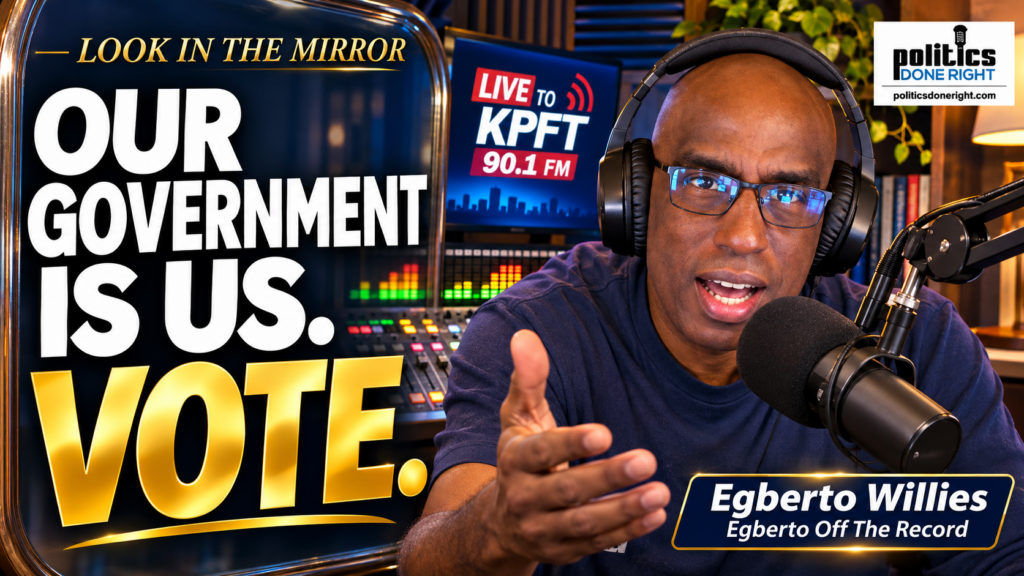
A $1,500 monthly premium and a farmer in the KPFT chat bring Election Day home. Who gets to write the next budget, and whose family will pay for it?
BE A PART OF REACHING ALL. YOUR PAID SUBSCRIPTION DOES IT
We are almost ready to win big, if we can reach everyone. We make our newsletters and videos free because everyone deserves the truth, regardless of their ability to pay. We are countering the billionaire and corporate media to reach as many Americans as possible. We don’t need unlimited funds, but we rely entirely on small-dollar grassroots support to keep going. Please become a paid subscriber today so we can keep flooding the zone with the truth. We can’t do this without you.



Summary
From his home studio, the Politics Done Right host opens his KPFT broadcast with a challenge. Before Americans ask how their government could do this to them, they ought to look in the mirror. The reflection belongs to the whole electorate. A family paying more for health insurance can oppose every cut and still live with the choices other voters made.
- Turnout helped Trump. A larger share of Trump’s 2020 voters returned in 2024 than Biden’s did. Trump also gained an edge among people who had skipped the previous election.
- A premium bill makes the stakes personal. A club president told the host that coverage for one person cost $1,500 a month and still carried a large deductible.
- The Republican budget redistributed resources upward. The Congressional Budget Office projects that the 2025 law will leave households at the bottom with fewer resources while households higher up gain.
- A farmer in the chat connected foreign aid to the local economy. The host recounted that her farm supplied food for overseas aid. A purchase order in a farm country and a meal abroad can come from the same public dollar.
- The mirror extends beyond the border. The host condemns attacks on civilians and asks Americans to reckon with the danger their own government creates when it inflicts suffering abroad.
The broadcast closes with a demand for more than turnout. Voters should ask who will restore what Congress took away, cast a ballot, and hold the winner to that commitment.
Premium Content (Complimentary)
Look in the Mirror. The Government That Sent That Bill Is Us.
A club president told the Politics Done Right host that health insurance for one person cost $1,500 a month. Twelve months at that price comes to $18,000. And even after paying that, the policyholder still faced a large deductible. What does an election have to do with that bill? From behind the microphone in his home studio, broadcasting to KPFT in Houston, the host argued that the person opening the envelope has every reason to ask who wrote the rules.
That is what it means to look in the mirror. No individual voter ordered up this government. Plenty of people voted against Donald Trump and got the same premium notices as their neighbors. But elections settle who gets to write a budget. In 2024, 89 percent of Trump’s 2020 voters returned to the polls, compared with 85 percent of Joe Biden’s. Trump also won more support than Kamala Harris among voters who had sat out 2020 and turned out four years later. Each group changed the result a little. Together they helped put the pen in Trump’s hand.
Consider what Republicans did with that pen. The Congressional Budget Office examined the 2025 tax and spending law and accounted for changes in taxes, Medicaid, food assistance, and state budgets. It found that households at the bottom would lose resources, while those at the top would gain. A grocery clerk can work an entire shift ringing up food and still need help buying dinner. What public purpose does Congress serve by making that household poorer so a wealthy household can keep more?
Health coverage shows how politicians can raise a family’s expenses without ever sending it a tax bill. Congress let the enhanced Affordable Care Act premium credits expire. KFF found that the average monthly amount marketplace customers paid after tax credits rose from $113 in 2025 to $178 in 2026. Some people kept the monthly charge down by choosing plans with higher deductibles. For someone who needs regular care, that bargain can unravel at the first appointment. The club president’s experience gives that arithmetic a human voice.
Then a farmer joined the program’s chat. According to the host, her farm had supplied food for U.S. foreign aid. Think about that transaction from both ends. A family overseas eats. An American producer gets paid for growing something people need. Anyone campaigning against aid as a giveaway ought to explain to that farmer exactly what was wasteful about her work.
The broadcast asked an equally hard question about how Americans use their power. A government can send food overseas, and it can send weapons. Americans understand why an attack on their neighbors leaves grief and anger that last for years. Families in Iran can grieve in the same way. Taking that grief seriously is part of preventing the next act of violence. Voters have every reason to ask a candidate who wants military force what happens to the people underneath it, and what happens afterward.
On Election Day, the questions can be plain. Who will make coverage affordable enough to use? Who will protect the grocery clerk’s food assistance? Who can explain to a farm family what a tariff or a canceled order will cost? A voter can demand an answer, mark a ballot, and remember the promise when the next budget comes up. The face in the mirror belongs to somebody with a say. Today is the day to use it.


