By Justin Podur
In January 2023, after five police officers killed Tyre Nichols, President Joe Biden quickly issued a statement calling on protesters to stay nonviolent. “As Americans grieve, the Department of Justice conducts its investigation, and state authorities continue their work, I join Tyre’s family in calling for peaceful protest,” said Biden. “Outrage is understandable, but violence is never acceptable. Violence is destructive and against the law. It has no place in peaceful protests seeking justice.”
In June 2022, when the Supreme Court overturned Roe v. Wade, Biden made the same call to protesters. “I call on everyone, no matter how deeply they care about this decision, to keep all protests peaceful. Peaceful, peaceful, peaceful,” Biden said. “No intimidation. Violence is never acceptable. Threats and intimidation are not speech. We must stand against violence in any form, regardless of your rationale.”
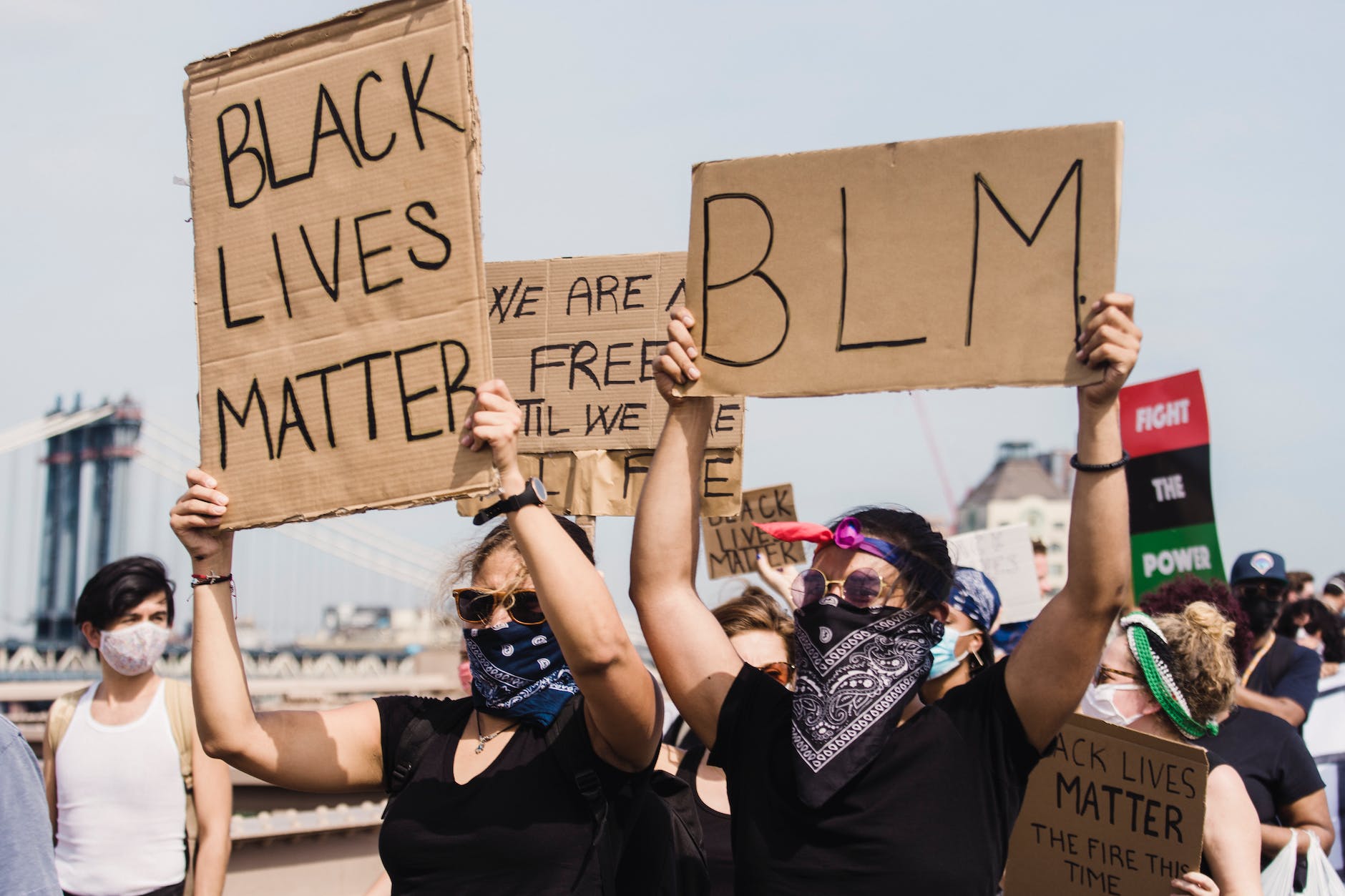
It is a curious spectacle to have the head of a state, with all the levers of power, not using that power to solve a problem, but instead offering advice to the powerless about how to protest against him and the broken government system. Biden, however, showed no such reluctance to use those levers of power against protesters. During the Black Lives Matter protests of 2020 after the murder of George Floyd, when Biden was a presidential candidate, he made clear what he wanted to happen to those who didn’t heed the call to nonviolence: “We should never let what’s done in a march for equal rights overcome what the reason for the march is. And that’s what these folks are doing. And they should be arrested—found, arrested, and tried.”
In the face of murderous police action, Biden called on protesters to be “peaceful, peaceful, peaceful.” In the face of non-nonviolent protesters, Biden called on police to make sure the protesters were “found, arrested, and tried.”
Are protesters in the United States (and perhaps other countries where U.S. protest culture is particularly strong, like Canada) being held to an impossible standard? In fact, other Western countries don’t seem to make these demands of their protesters—consider Christophe Dettinger, the boxer who punched a group of armored, shielded, and helmeted French riot police until they backed off from beating other protesters during the yellow vest protests in 2019. Dettinger went to jail but became a national hero to some. What would his fate have been in the United States? Most likely, he would have been manhandled on the spot, as graphic footage of U.S. police behavior toward people much smaller and weaker than Dettinger during the 2020 protests would suggest. If he survived the encounter with U.S. police, Dettinger would have faced criticism from within the movement for not using peaceful methods.
There is a paradox here. The United States, the country with nearly 800 military bases across the world, the country that dropped the nuclear bomb on civilian cities, and the country that outspends all its military rivals combined, expects its citizens to adhere to more stringent standards during protests compared to any other country. Staughton and Alice Lynd in the second edition of their book Nonviolence in America, which was released in 1995, wrote that “America has more often been the teacher than the student of the nonviolent ideal.” The Lynds are quoted disapprovingly by anarchist writer Peter Gelderloos in his book How Nonviolence Protects the State, an appeal to nonviolent protesters in the early 2000s who found themselves on the streets with anarchists who didn’t share their commitment to nonviolence. Gelderloos asked for solidarity from the nonviolent activists, begging them not to allow the state to divide the movement into “good protesters” and “bad protesters.” That so-called “antiglobalization” movement faded away in the face of the post-2001 war on terror, so the debate was never really resolved.
For the U.S., the UK, and many of their allies, the debate over political violence goes back perhaps as far as the white pacifists who assured their white brethren, terrified by the Haitian Revolution, which ended in 1804, that abolitionism did not mean encouraging enslaved people to rebel or fight back. While they dreamed of a future without slavery, 19th-century abolitionist pacifists understood, like their countrymen who were the enslavers, that the role of enslaved people was to suffer like good Christians and wait for God’s deliverance rather than to rebel. Although he gradually changed his mind, 19th-century abolitionist and pacifist William Lloyd Garrison initially insisted on nonviolence toward enslavers. Here Garrison is quoted in the late Italian communist Domenico Losurdo’s book Nonviolence: A History Beyond the Myth: “Much as I detest the oppression exercised by the Southern slaveholder, he is a man, sacred before me. He is a man, not to be harmed by my hand nor with my consent.” Besides, he added, “I do not believe that the weapons of liberty ever have been, or ever can be, the weapons of despotism.” As the crisis deepened with the Fugitive Slave Law, Losurdo argued, pacifists like Garrison found it increasingly difficult to call upon enslaved people to turn themselves back to their enslavers without resistance. By 1859, Garrison even found himself unable to condemn abolitionist John Brown’s raid on Harpers Ferry.
The moral complexities involved in nonviolence in the antiwar movement were acknowledged by linguist, philosopher, and political activist Noam Chomsky in a 1967 debate with political philosopher Hannah Arendt and others. Chomsky, though an advocate for nonviolence himself in the debate, concluded that nonviolence was ultimately a matter of faith:
“The easiest reaction is to say that all violence is abhorrent, that both sides are guilty, and to stand apart retaining one’s moral purity and condemn them both. This is the easiest response and in this case I think it’s also justified. But, for reasons that are pretty complex, there are real arguments also in favor of the Viet Cong terror, arguments that can’t be lightly dismissed, although I don’t think they’re correct. One argument is that this selective terror—killing certain officials and frightening others—tended to save the population from a much more extreme government terror, the continuing terror that exists when a corrupt official can do things that are within his power in the province that he controls.”
“Then there’s also the second type of argument… which I think can’t be abandoned very lightly. It’s a factual question of whether such an act of violence frees the native from his inferiority complex and permits him to enter into political life. I myself would like to believe that it’s not so. Or at the least, I’d like to believe that nonviolent reaction could achieve the same result. But it’s not very easy to present evidence for this; one can only argue for accepting this view on grounds of faith.”
Several writings have sounded the warning that nonviolence doctrine has caused harm to the oppressed. These include Pacifism as Pathology by Ward Churchill, How Nonviolence Protects the State and The Failure of Nonviolence by Peter Gelderloos, Nonviolence: A History Beyond the Myth by Domenico Losurdo, and the two-part series “Change Agent: Gene Sharp’s Neoliberal Nonviolence” by Marcie Smith.
Even the historic victories of nonviolent struggles had a behind-the-scenes armed element. Recent scholarly work has revisited the history of nonviolence in the U.S. civil rights struggle. Key texts include Lance Hill’s The Deacons for Defense, Akinyele Omowale Umoja’s We Will Shoot Back, and Charles E. Cobb Jr.’s This Nonviolent Stuff’ll Get You Killed. These histories reveal continuous resistance, including armed self-defense, by Black people in the United States.
Even before these recent histories, we have Robert Williams’s remarkable and brief autobiography written in exile, Negroes With Guns. Williams was expelled from the NAACP for saying in 1959: “We must be willing to kill if necessary. We cannot take these people who do us injustice to the court. … In the future we are going to have to try and convict these people on the spot.” He bitterly noted that while “Nonviolent workshops are springing up throughout Black communities [, n]ot a single one has been established in racist white communities to curb the violence of the Ku Klux Klan.”
As they moved around the rural South for their desegregation campaigns, the nonviolent activists of the civil rights movement often found they had—without their asking—armed protection against overzealous police and racist vigilantes: grannies who sat watch on porches at night with rifles on their laps while the nonviolent activists slept; Deacons for Defense who threatened police with a gun battle if they dared turn water hoses on nonviolent students trying to desegregate a swimming pool. Meanwhile, legislative gains made by the nonviolent movement often included the threat or reality of violent riots. In May 1963 in Birmingham, Alabama, for example, after a nonviolent march was crushed, a riot of 3,000 people followed. Eventually a desegregation pact was won on May 10, 1963. One observer argued that “every day of the riots was worth a year of civil rights demonstrations.”
As Lance Hill argues in The Deacons for Defense:
“In the end, segregation yielded to force as much as it did to moral suasion. Violence in the form of street riots and armed self-defense played a fundamental role in uprooting segregation and economic and political discrimination from 1963 to 1965. Only after the threat of black violence emerged did civil rights legislation move to the forefront of the national agenda.”
Biden’s constant calls for nonviolence by protesters while condoning violence by police are asking for the impossible and the ahistorical. In the crucial moments of U.S. history, nonviolence has always yielded to violence.
Author Bio: This article was produced by Globetrotter. Justin Podur is a Toronto-based writer and a writing fellow at Globetrotter. You can find him on his website at podur.org and on Twitter @justinpodur. He teaches at York University in the Faculty of Environmental and Urban Change.