EarthTalk® From the Editors of E – The Environmental Magazine
Dear EarthTalk: What is firescaping and what’s the connection with native plants? – J.T., via email
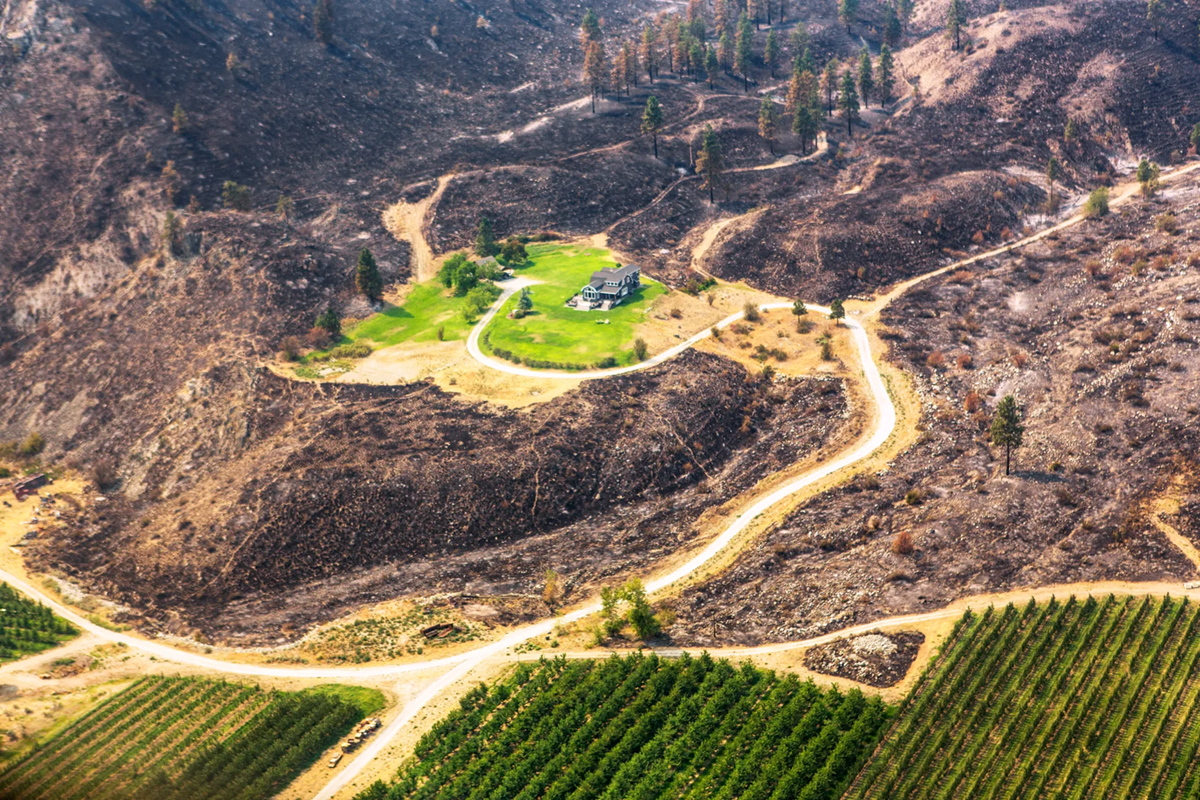
Firescaping involves designing a landscape to fireproof a property while maintaining aesthetic appeal. By thoughtfully choosing and arranging plants and construction materials, the likelihood of igniting a fire, along with its potential severity and the speed at which it spreads, can be significantly reduced.
A firescape design often involves multiple zones. Zone 0, also known as a ‘noncombustible zone,’ is the perimeter region zero to five feet away from the home. Anything within this region should be incombustible. This most frequently means putting pavement, bricks or rocks around the border of the home to prevent any groundfires from being able to make direct contact. In addition, avoid planting vegetation beneath decks or balconies as fire and heat tends to climb upward.
All vegetation should be kept at least 10 feet away from homes for optimal fireproofing, and trees should always be kept at least 15 feet away from chimneys and powerlines. When choosing the placement of trees, consider their size at maturity versus their size at the time of planting. Additionally, the crowns of trees should be kept at least 10 feet apart via pruning. This helps avoid fire laddering, whereby flames ignite lower branches or shrubs, initiating upward movement before spreading to adjacent trees.
Zone 1 is the ‘lean, clean, green’ area within 30 feet of a home. Certain plants, such as junipers, conifers and other evergreens should not be planted in this region because they contain oils, resins and waxes that make them flammable. Other characteristics of incendiary plants include those containing dry or dead twigs and needles and those having strongly aromatic terpenoid leaves.
Instead, choose plants that are less ‘woody’, have higher moisture content, and are ground covers. Deciduous trees and shrubs, as well as succulents and some perennials, are better-suited options. Furthermore, many native plants possess evolutionary adaptations, such as deep root systems and fire-resistant bark, which make them resilient to wildfires. Incorporating a variety of native plants fosters biodiversity, which in turn promotes plant health. Diverse and healthy native ecosystems create natural firebreaks and slow the spread of fires.
The organization of vegetation and structures also play a vital role in firescaping. Incorporating materials like concrete, stone and brick in the construction of driveways, walkways, patios and fences establishes effective firebreaks while offering both functional and aesthetic value. Though bare dirt can also serve as a noncombustible fuel break, it is not recommended due to the potential of soil erosion. Buffering, or creating separation between distinct layers of ground covers, shrubs and trees, limits a fire’s ability to climb and intensify. Adding water features in firescaping introduces a dynamic element that can act as a natural firebreak. Ponds, streams or other water sources can serve as barriers, hindering the progression of wildfires by creating a moisture-rich environment. Finally, removing dead vegetation is a critical component of firescaping as it eliminates potential fuel sources for fires, disrupting the continuity of combustible material.
CONTACTS: Q&A with the Authors of Firescaping Your Home: A Manual for Readiness in Wildfire Country, https://www.hachettebookgroup.com/qa/timber-press-post-firescaping-qa/?lens=timber-press; Firescaping, https://firesafemarin.org/create-a-fire-smart-yard/firescaping/.