Cooperative living might look idyllic on paper, but intentional communities aren’t easy to sustain. It takes a hardy soul to weather all the monetary struggles, power imbalances, compromises with neighbors, and other complications that come with choosing this lifestyle. According to Diana Leafe Christian’s book, Creating a Life Together: Practical Tools to Grow Ecovillages and Intentional Communities, 90 percent of all ecovillages and off-grid communes are destined for early collapse.
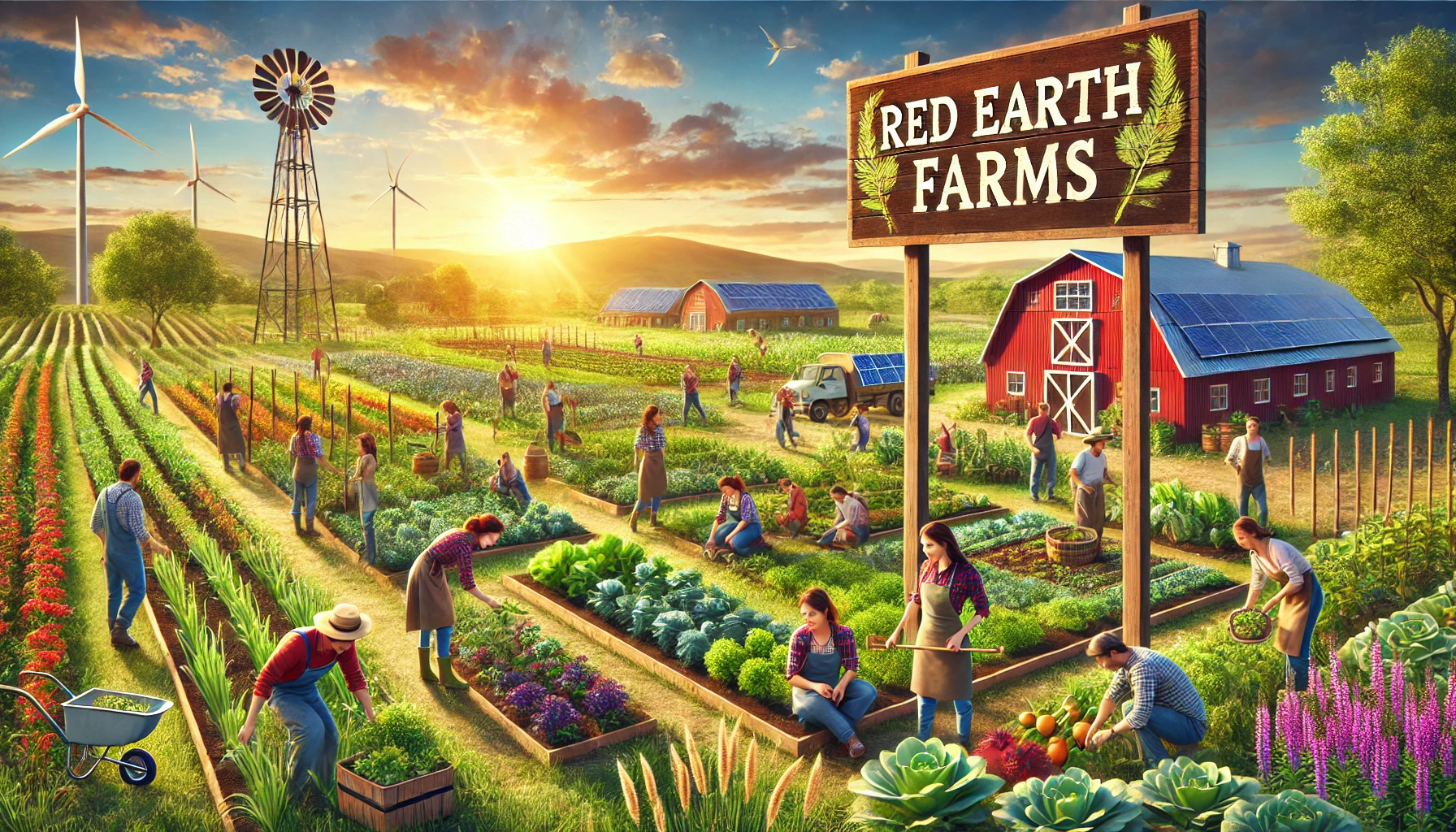
So how has Red Earth Farms, a 76-acre collective in the rolling hills of northeast Missouri, been going strong since 2005?
Part of the answer comes down to elbow room. “In some intentional communities, people are really enmeshed in each other’s day-to-day life,” notes Kim Scheidt, one of the four founding members of Red Earth Farms. “That’s not the case here unless people choose [that]. There are definitely groups of friends who I see every day, and then there are also people who I only see once in a while at meetings. It’s by choice, and I think in a lot of ways that works really well.”
A woodsy, open-air environment with six ponds and a creek adds to the feeling of personal space, as does the absence of a common house or shared property that all community members manage as a group. Scheidt, who lives with her daughter Nina in one of Red Earth’s eight sub-communities—a 12.5-acre homestead called Dandelion—feels that the lack of a common space helps foster a sense of autonomy among residents.
Flexibility has also played a part in Red Earth’s long-term success. “We value diversity of implementation of ideas,” Scheidt says. As an example, she mentions that while the members of the community have strong ecological values, they also recognize that there are many ways to put those principles into practice. “Some people might want to use tractors; some people might say, ‘No tractors at all.’”
Similarly, it’s up to individual residents whether or not to keep animals, cultivate field crops as opposed to small gardens, or share resources such as tools and vehicles. “We definitely encourage cooperation, but we also want to be careful not to have coercive cooperation,” Scheidt says.
While freedom of choice promotes a feeling of autonomy within this community, a largely shared appreciation for self-sufficiency and environmental sustainability helps create cohesion. Several Red Earth inhabitants try to produce much of their own food, fuel, and other resources, and through a yearly ecological audit, all residents report activities such as cutting down or planting trees and using manure or firewood.
The residents are mindful of Red Earth Farms’s mission to find sustainable ways to meet their needs based on the community’s guiding principle, “Love the land; love your neighbors.”
Finding Agreement
Decisions at Red Earth are made by consensus. Occupants are encouraged to attend full-community meetings, which take place around once a month. By sitting out a meeting, tenants explicitly waive the right to weigh in on the agenda items.
Of course, even within a group that honors cooperation and nonviolence, friction can arise between individuals. According to Red Earth Farms’s conflict resolution policy, if a disagreement can’t be resolved through one-on-one conversation, residents in dispute will call upon a mediator from within the community or from one of the other intentional communities nearby. Of the latter, Scheidt explains, “If somebody feels like they need somebody more removed from the outcome, they can ask for some outsider help. If, for some reason, that still doesn’t work, they can bring it to the full group of Red Earth Farms [tenants], and we can try to help people come to some sort of agreement.”
Living Cooperatively
Red Earth is less than one mile from the sustainable living community Dancing Rabbit Ecovillage and three miles from the income-sharing commune Sandhill Farm. Scheidt helps with gardening and animal care at the former, and all three communities converge for weekly group dinners.
Scheidt says working with neighbors “makes a big difference if someone has a skill that they can share—construction or whatever it might be.” She adds that Red Earth Farms and its neighboring communities frequently use the barter system and gift economy. “If my friend has eggs, I might trade vegetables for them or something like that.”
The gifts of communal living can also come in less quantifiable forms. “My daughter’s dad passed away in 2018, so it’s really nice that she can have sort of an extended family,” Scheidt says. “I am a single mom, but I also have a lot more support than many other single moms have.”
Finances
Red Earth operates under a community land trust model designed to maximize affordability. “Some other [models of] intentional communities work well for people with a lot of money, or they work well for just a certain subset of the population,” notes Scheidt, a former accountant. “Making land accessible to people with fewer means is important to us.”
Aided by a loan from a friend of the community, Red Earth’s founders purchased the site’s 76 acres for $90,000 in 2005. Upon joining the group, residents pay for a 99-year lease that imparts rights similar to ownership. This system helps ensure that, as Scheidt puts it, “someone can have a five-acre homestead, and we’re not price-gouging them.”
To help make this model as replicable as possible, Red Earth has posted all of its founding documents online. In light of the group’s unusual longevity, the hope is that these sources might serve as a valuable template for anyone interested in starting a sustainable intentional community.
AUTHOR BIO:
Damon Orion is a writer, journalist, musician, artist, and teacher in Santa Cruz, California. His work has appeared in Revolver, Guitar World, Spirituality + Health, Classic Rock, High Times, and other publications. Read more of his work at DamonOrion.com.
This article was produced by Local Peace Economy.