Recently appointed British Prime Minister Keir Starmer pledged his loyalty to British King Charles III on July 6, 2024, continuing a tradition that dates back centuries. However, since the leadership role taken by Prime Minister David Lloyd George in World War I, the monarchy’s political influence has become progressively ceremonial and even more precarious since the death of the late Queen Elizabeth II in 2022.
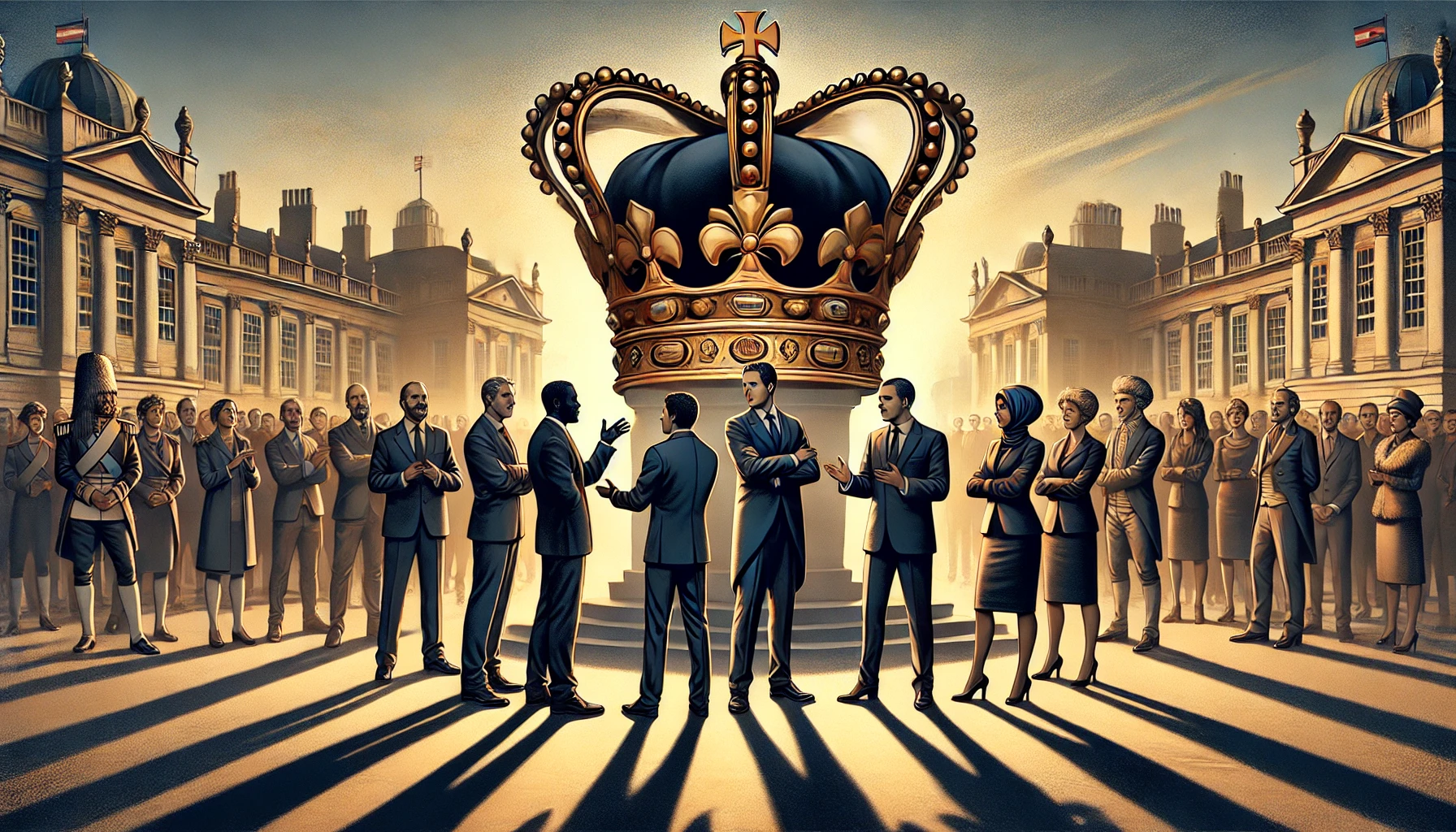
This trend is not unique to the UK; in recent centuries, the role of royalty in politics has declined considerably worldwide. As political ideals began challenging royal authority in Europe, European colonial powers began to undermine their authority overseas. The strain of World War I helped cause several European monarchies to collapse, and World War II diminished their numbers further. After, the Soviet Union and the U.S. divided Europe along ideological lines and sought to impose their communist and liberal democratic ideals elsewhere, and the remaining monarchs faced accelerating marginalization.
Today, fewer than 30 royal families are politically active on a national scale. Some, like Japan’s and the UK’s, trace their lineages back more than a millennium, while Belgium’s is less than 200 years old. Several have adapted by reducing political power while maintaining cultural and financial relevance, while others have retained their strong political control. Their various methods and circumstances make it difficult to determine where royals may endure, collapse, or return.
Alongside the UK, the royals of Belgium, Spain, Sweden, Norway, Denmark, and the Netherlands have all seen their powers become largely ceremonial. Smaller European monarchical states like Andorra and the Vatican City are not hereditary, while Luxembourg, Monaco, and Liechtenstein are—though only the latter two still wield tangible power.
Attempts to exercise remaining royal political power have often highlighted its increasing redundancy. Belgian King Baudouin’s refusal to sign an abortion bill in 1990 saw him declared unfit to rule before being reinstated once it passed. Luxembourg’s Grand Duke Henri meanwhile lost his legislative role in 2008 after refusing to sign a euthanasia bill. Following increasing scrutiny of Queen Beatrix’s influence, the Dutch monarch’s role in forming coalition governments was transferred to parliament in 2012, and she also lost the ability to dissolve parliament.
The British monarch’s decline in political influence is also evident, but it can still prove useful. The royal family’s global popularity is used to project soft power, while royal visits can help seal important agreements, particularly in countries with other royal families. The leaders of 14 other countries also pledge allegiance to King Charles III as their head of state.
Additionally, the monarchy can be used to bypass certain democratic processes. In 1999 the British government advised Queen Elizabeth II to withhold Queen’s Consent, preventing parliamentary debate on the Military Action Against Iraq Bill, which would have restricted the ability to take military action without parliamentary approval.
Royal efforts to cultivate soft power and maintain a positive public image have also been crucial for their survival. Belgium’s royal family is seen as a necessary source of political stability and unity. In Spain, former King Juan Carlos played a leading role in the country’s transition to democracy in the 1970s. Modernizing their image as neutral political guardians with relatable attributes who engage in advocacy and humanitarian work often gives European royal families higher approval ratings than politicians.
Royal families have also downsized in recent years for discretion and to reduce costs. In 2019, Sweden’s king removed royal titles, duties, and some privileges from five of his grandchildren. The Danish queen implemented similar changes in 2022. Norway’s royal family now consists only of the King, Queen, Crown Prince, and Princess, while the British royal family has hinted at further reducing its current number of 10 “working royals.”
Despite these efforts, European royal families continue to face scandals and intense public and media scrutiny. In 2020, Spanish and Swiss authorities began investigating former Spanish King Juan Carlos for allegedly receiving $100 million from a deal with Saudi Arabia. In 2023, Belgium’s Prince Laurent was accused of fraud and extortion by Libya’s sovereign wealth fund. The UK royal family’s recent treatment of Megan Markle and the departure of Prince Harry and Prince Andrew’s association with Jeffrey Epstein have also rocked Britain. The British monarchy’s unprecedented challenges are reinforced by record-low support since the death of Queen Elizabeth II in 2022. The King’s and Princess Kate’s cancer diagnoses have also added to the sense of fragility.
Across Europe, cultural shifts, concern over royal expenses, and increasing political irrelevance have threatened its royal families. Movements like the Alliance of European Republican Movements, created in 2010 to abolish monarchies altogether, reflect the increasing disregard for royal power.
The opaque nature of royal finances, however, has granted some respite. Officially, Grand Duke Henri of Luxembourg’s $4 billion makes him Europe’s richest royal. However, suspicions abound regarding billions more in assets like trusts, jewelry, and art collections that point to larger degrees of wealth.
Extensive efforts go into hiding these fortunes. Liechtenstein’s royal family operates a bank criticized by the U.S. Senate for aiding clients in tax evasion, dodging creditors, and other misconduct. Queen Elizabeth II once used Queen’s Consent to change a draft law so that her wealth remained concealed, while the Panama Papers leaks revealed huge undisclosed European royal assets. Europe’s poorest royal family in Belgium saw King Phillippe declare the monarchy’s wealth at roughly £11 million in 2013, but the European Union Times estimated it at £684 million.
Estimates for King Charles’s worth range from $750 million to more than $2 billion, while the fortunes of the entire British royal family, also known as “the Firm,” can range from $28 billion to almost $90 billion. Britain’s monarchs also enjoy more institutionalized ties to national wealth than other European royals. Through the peerage system that upholds British nobility, a network of support from wealthy Dukes, Marquesses, Earls, Viscounts, and Barons helps the monarchy remain firmly entrenched in the UK’s wealth centers.
Royal families in the Asia-Pacific consist of Thailand, Malaysia, Cambodia, Brunei, Japan, and Tonga. Thailand’s King is the world’s richest, with a net worth of $43 billion, but faces his own controversies relating to personal scandals and the use of political powers that have led to an anti-monarchy movement. Malaysia has a rotational system of nine sultans that rule their own states and serve as head of state every five years. While formal authority is limited, the sultans command influence in cultural and religious matters, and despite their powers being curtailed by constitutional amendments, occasionally intervene in politics. In Cambodia, the monarchy is similarly politically and culturally influential.
Brunei’s absolute monarchy has granted its Sultan, Hassanal Bolkiah, supreme authority over his country for more than 50 years. His $288-billion fortune makes him the second-richest monarch in the world. However, as a microstate, Brunei’s influence in international affairs is limited. The reduced power of Japan’s monarchy since 1945 has meanwhile made it most like European monarchies, though its powers have remained steady since then. In sub-Saharan Africa, partnerships with British colonial authorities have allowed Lesotho’s monarchy to retain largely ceremonial influence, while Eswatini’s King Mswati III exerts strong control over the country.
Nonetheless, alongside Europe, most regions have seen general declines in royal power over decades. Bucking that trend is the Middle East, where monarchies previously had limited authority under the Ottoman Empire. Its collapse after World War I allowed them to increase their power considerably, even those under loose French and British protectorates.
By exploiting their increasingly valuable resource reserves, Gulf monarchies in particular managed to thrive. Today, absolute monarchies exist in Saudi Arabia, the United Arab Emirates (UAE), Bahrain, Oman, Qatar, and Kuwait with complete control over media, government branches, and law enforcement. No opposition is tolerated, and they are backed by religious lobbies that reinforce their status as custodians of cultural traditions. Despite the heavy-handed approach they largely enjoy strong support, even among the youth—the Saudi Crown Prince has long been popular among younger Saudis in particular.
As in Europe, Middle Eastern royal wealth is often hidden and difficult to discern. Estimates for the combined wealth of the Saudi royal family range from roughly $100 billion to $1.4 trillion. Other estimates put the UAE’s Al Nahyan family of Abu Dhabi as the richest royal family in the world, with more than $300 billion in wealth. The royal families of Kuwait and Qatar also have fortunes often measured in the hundreds of billions.
The other Middle Eastern royal families in Oman, Jordan, and Morocco, have less influence, but still more so than in Europe, and have also withstood democratization pressures by promoting stability. During the Arab Spring, as other Middle Eastern states faced revolutions and civil wars, the monarchies and their political systems survived in place.
However, the downfall of royal families in Egypt, Tunisia, Iraq, North Yemen, Libya, and Iran during the 20th century shows the risks of instability. Today, this often comes from within the royal families themselves. Saudi royal disputes regularly play out in public, including a mass purge in 2017. In 2023, Jordan’s crown prince was placed under house arrest for an attempted coup, only to emerge days later and pledge loyalty to the king. The 2017–21 Qatar-Saudi Crisis meanwhile saw Saudi Arabia, the UAE, Bahrain, and Egypt sever diplomatic relations and blockade Qatar following accusations of supporting terrorism and supporting Iran.
While some of their positions may be precarious, royal families maintain some solidarity among them. Marriages between European royals throughout history mean that the current ruling royals in Europe are all related, similar to some Middle Eastern monarchies. Following controversy over corruption allegations, Spain’s Juan Carlos meanwhile lived in exile in the UAE for two years.
Royals have also taken more active roles to support one another. The British royal family played a significant diplomatic role in supporting the Arab monarchs against the Ottoman Empire in World War I. And in 1962, the British monarchy, which had a close relationship with the Brunei monarchy, helped lobby to send British forces to the country and quash an armed rebellion, maintaining British influence in Southeast Asia.
Other royal families could still return to power. More than 20 royal families remain without a country to reign over, with Spain’s monarchy being restored in 1975 and Cambodia’s in 1993 the latest to be reintegrated into politics. In Romania in 1992, an estimated one million people took to the streets to welcome former King Michael, who abdicated in 1947. The daughter of former King Michael, Margareta of Romania, now lives in Elisabeta Palace in Bucharest, and other family members have taken a growing role in politics.
Bulgaria’s former Tsar, Simeon II, lived in Spain after being overthrown in 1946 and returned to Bulgaria after the communist government crumbled, serving as prime minister from 2001 to 2005. Albania’s Prince Leka, grandson of former King Zog I, attempted to reinstate the monarchy in a 1997 referendum but failed. In 2007, family members of former Italian King Umberto II sought damages for their exile and the return of assets, countered by Italy’s government suing for damages due to royal collusion with Mussolini.
The Italian royal family’s case shows how disputes among exiled royals can have geopolitical implications. Greece’s royal family now lives in London, frequently appearing at royal functions. Meanwhile, members of Iran’s former royal family, as well as descendants of Ethiopia’s and Russia’s, live in the U.S. Although there is no current method or desire to launch a political movement to put them back into power, leveraging diaspora communities’ support for royalty can still help host governments wield influence through them.
Having survived fascism and communism, monarchies have largely relinquished political power in the modern liberal world order. Yet, as symbols of state continuity, some monarchs have maintained their relevance by providing long-term stability. While incompatible with communism, royalty’s adaptability to democratic and fascist regimes highlights their resilience. Their ability to reinvent themselves and demonstrate their usefulness to contemporary politics may secure their survival—though their dwindling numbers suggest this will remain challenging.
AUTHOR BIO: John P. Ruehl is an Australian-American journalist living in Washington, D.C., and a world affairs correspondent for the Independent Media Institute. He is a contributing editor to Strategic Policy and a contributor to several other foreign affairs publications. His book, Budget Superpower: How Russia Challenges the West With an Economy Smaller Than Texas’, was published in December 2022.