


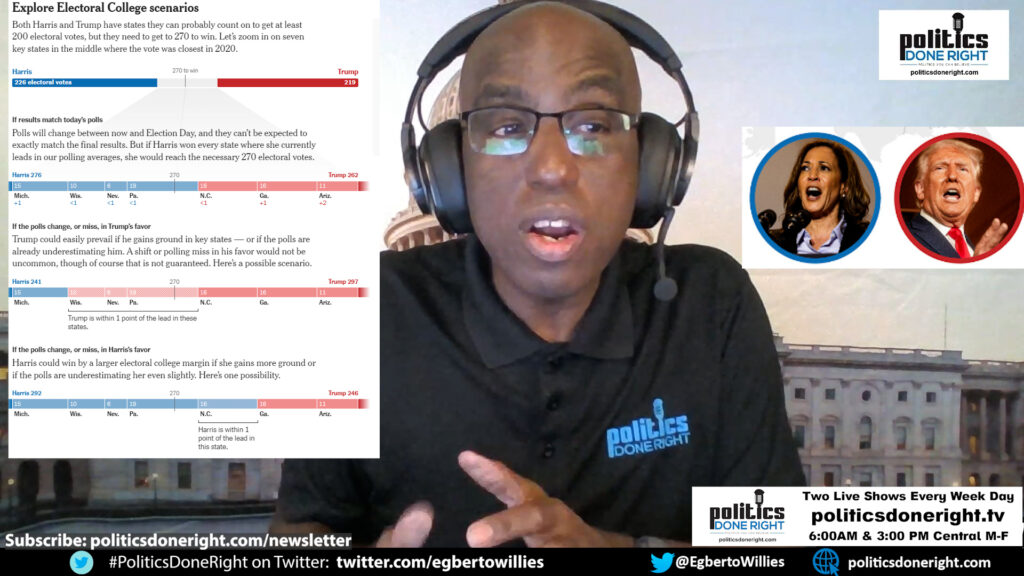
While I expect VP Kamala Harris to win, it is incumbent on activist journalists and our activist networks to start creating communication structures that bypass the internet and the mainstream media. Both have shown the propensity to acquiesce to the fascist — the Washington Post & LA Times’ refusal to print their endorsement of VP Harris is probative.
I expect Harris will win, but …


Podcasts (Video — Audio)
Summary
I believe that Kamala Harris is positioned to win the presidency, driven by the polling data and a surge in support from women motivated by reproductive rights issues. Despite my confidence, I must emphasize the importance of preparing for potential disruptions, especially given the influence of billionaire-controlled media and social media platforms, which authoritarian interests could sway. They call for decentralized, analog communication methods—such as local organizing hubs and ham radios—to ensure activists can communicate freely, regardless of possible censorship or interference from corporate-owned digital networks.
- Based on current polls and the expected women’s vote surge, I am 90% confident that Kamala Harris will win, particularly in swing states. BUT WE MUST VOTE TO MAKE THIS A REALITY!
- Media conglomerates like the Washington Post and LA Times have declined to print their endorsements of Harris due to pressure from corporate ownership.
- Big tech platforms (e.g., X, Facebook, Google) could censor progressive voices under corporate or authoritarian influence.
- We must create a decentralized communication network to bypass potential internet and media suppression.
- Suggested alternatives include setting up local hubs, using ham radios, and avoiding dependence on internet-based platforms.
Even as the environment should predicate a Harris victory, progressive activists need to establish alternative communication channels independent of corporate influence. In an age where a handful of billionaires control social media and traditional media, building resilient, grassroots structures ensures the movement’s message can persist. This call to prepare emphasizes that true democratic activism must reclaim control of our democracy from monopolized media giants, enabling people-driven discourse and protecting the voices of those striving for justice and equality.
[ppp_patron_only level=2]
I feel confident in Kamala Harris’s chances as I analyze the political climate around the upcoming election. I believe she’s positioned to win the presidency decisively, especially in crucial swing states. My gut tells me that Harris will not only win but that she’ll do so with a considerable lead in the electoral college. I base this on the data available and the momentum among key voter demographics, especially women galvanized by reproductive rights issues. But even as I see these positive signs, I recognize the need for caution. In the face of potential disruptions, we must now prepare by creating communication structures outside the reach of the mainstream media (MSM) and the internet. This election isn’t just about voting; it’s also about safeguarding our ability to organize and communicate effectively, regardless of what happens with digital platforms.
Several factors, including current polling and a sense of urgency among women voters, reinforce my conviction in Harris’s chances. I’ve observed, for instance, that restrictive rulings on reproductive rights have mobilized a significant bloc of voters, and they are unlikely to remain silent. Historically, polls have missed these passionate, reactive responses from specific demographics, often to their detriment. In 2016, underestimating the fervor of certain voting blocs led to a shocking upset; this year, I believe it’s the opposite—the polls may be underestimating the intensity of those who oppose Trump and support reproductive rights. This groundswell, I think, will carry Harris to a surprising level of success in swing states and possibly even in traditionally conservative areas.
However, I am concerned about whether the media and tech giants will play fair. Some of our trusted news sources are showing signs of caving to Trump’s potential fascist pressures, with recent examples from the Washington Post and the LA Times. As I see it, certain media outlets are hesitant to endorse Harris outright because of their owners’ political sympathies or fear of backlash from Trump and his supporters if he outright wins or is successful in stealing the election. It’s unnerving to think that even major publications, places we’ve relied on for balanced reporting, are starting to limit their political expression. If this trend continues, we could see an election cycle where progressive voices face unprecedented barriers to fair media representation.
Social media and tech platforms like Facebook, X (formerly Twitter), and Google add another layer of concern. Controlled by a handful of billionaires, these platforms hold enormous sway over public discourse. Given the power they wield, there’s a real possibility they could restrict progressive content—either by altering algorithms, silencing critical voices, or outright censoring certain narratives. This kind of interference could happen subtly, making it difficult for people to connect, share information, and rally support. I find it unsettling to think that just a few individuals hold the power to decide which messages can spread and which stay suppressed.
Given these risks, we must create alternative, decentralized communication networks. For me, this means tapping into historical methods of organizing that existed long before the Internet. We can build local “centers” in every precinct or community, each able to function independently of the web. These centers could distribute printed materials, host meetings, and even use analog tools like ham radios to maintain communication without relying on digital networks. It may seem unconventional to think of radio as a solution in the digital age, but ham radios operate on public frequencies and are difficult to regulate or censor. This analog method would give us a reliable backup if other channels are compromised.
Beyond specific tools, I think this shift requires a philosophical adjustment. The internet has always felt like an equalizer where anyone can have a voice. But as I see it, the internet is increasingly monopolized by corporations whose interests don’t align with progressive values. They can exert digital gatekeeping that blocks or hinders progressive messaging. I’ve realized that to stay resilient, we must look beyond social media and digital platforms. We must ensure that our movement is rooted in diverse, adaptable, and—if necessary—offline forms of communication.
In sum, this is a call to action for all who care about progressive causes and saving our democracy. While I fully expect Harris to win, we must be prepared for any outcome. Our democracy and our ability to organize shouldn’t depend on the whims of a few powerful corporations or the internet alone. By developing decentralized communication networks and analog alternatives, we ensure our message can reach people everywhere, no matter the obstacles we face. This isn’t just about being prepared for a worst-case scenario; it’s about reclaiming the true spirit of grassroots activism. As we work toward a fairer, more just society, we must ensure our message remains strong and that we stay connected, regardless of who tries to silence us.
[/ppp_patron_only]